Lakeland Kitchen Drain Jetting for Grease Buildup
Lakeland learned this lesson at city scale. It adopted a grease policy in 1995 after grease blockages were driving up sanitary sewer overflows. Nonresidential users must have grease interceptors. Homes do not, so whatever goes down a Lakeland kitchen sink travels straight into the same system your neighbors use.
At home the picture is smaller. A sink takes a little longer each month, the dishwasher makes it gurgle, and one evening nothing moves. A cable can open that. It cannot take the coating off, and the coating is the reason the sink slows again.
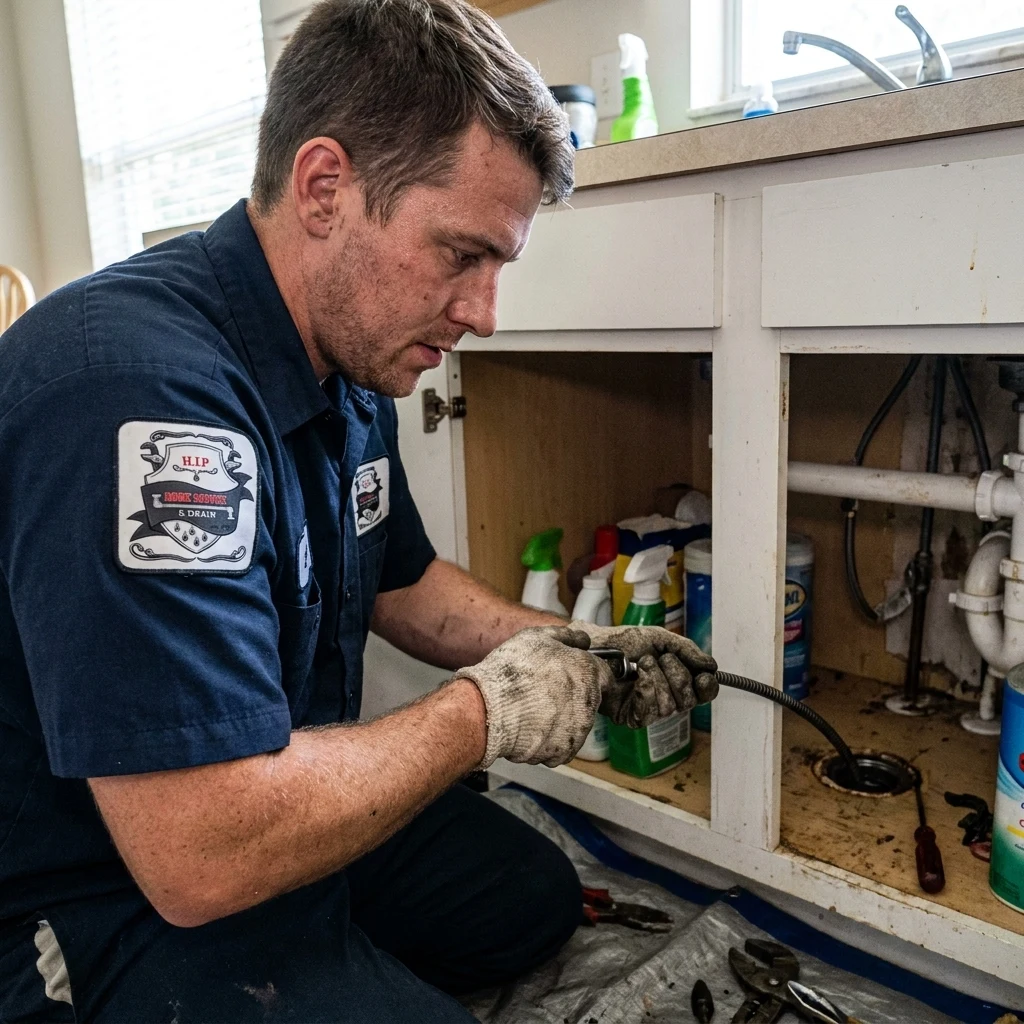
Signs of Grease Buildup in a Lakeland Kitchen Line
Grease gives notice slowly. The signs worth acting on:
- The sink empties more slowly each month, even right after the disposal runs
- The dishwasher cycle makes the sink gurgle or sends gray water into the basin
- A sour smell that cleaner masks for a day and no longer
- A clog that came back within weeks of a cable run
- A laundry sink or bathroom on the same branch slowing as well
- Pale, waxy residue on the cable when it comes out
- Wipes or paper fibers turning up in the trap
What the City Advises, and Where Jetting Fits
The city’s own advice is plain: let cooked fat cool, seal it in a container and put it in the trash, wipe pans with a paper towel before they reach the sink, and use the Cooking Oil Recycling Effort (C.O.R.E.) program for used oil. Those habits slow buildup. Our post on the cooking oil program and your kitchen line goes through them.
Hot water does not fix it. Winter Haven’s utility says as much: running hot water does not clear grease, which cools and sets again further down the pipe. Lakeland also asks residents to bin wipes even when the package says flushable, since they do not break down like toilet paper, and Winter Haven reports they combine with other debris into rags.
Once grease has set, jetting is the tool. A small-diameter hose goes in through the trap arm or a cleanout on the kitchen branch, and a rear-jet head works back toward the opening, stripping the wall as it comes. A disposal grinds food but does not dissolve fat, so its fine particles end up in the same line.
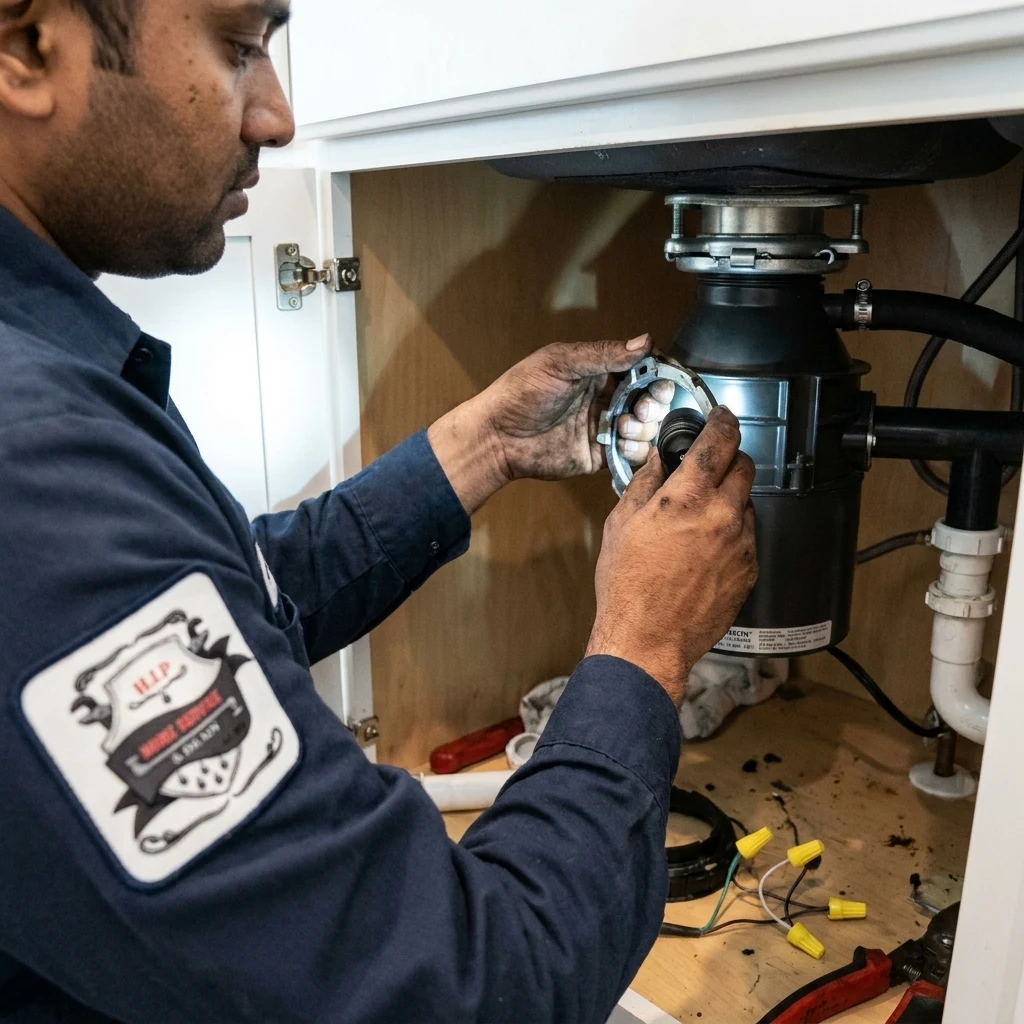
Kitchen Line Jetting Cost in Lakeland
Hydro jetting a kitchen line runs $275–$450. A kitchen drain snake run is $150–$275, and for a first clog with no history that is often the right buy. The break-even is the second or third cable visit in a year, the case worked out in three snakings versus one jetting. The price is in writing before work starts.
When it is not the answer: a sink slowed by a jammed disposal or a loose trap needs a fix at the fixture, not a hose. A branch that is cracked, sagging or full of roots needs a camera first. And no visit makes a kitchen line immune; it restarts the clock. This is household work only, not restaurant or commercial grease traps.
Where Kitchen Line Grease Jetting Gets Booked in Lakeland
Grease is the common thread, but older iron lines and newer plastic ones hold it in different ways.
- Dixieland — Craftsman bungalows on narrow lots with alleys, built mostly between 1905 and 1940. Kitchen stacks in houses that old may be cast iron, where a rough wall holds grease.
- Downtown Lakeland and Munn Park — Residences sit above shops in two- and three-story masonry buildings from 1884 to 1946. In buildings that age, the kitchen stack is where we start looking for grease.
- Biltmore-Cumberland — Masonry and block houses from the late 1940s and 1950s near Florida Southern. Original lines may be cast iron, and a pitted iron wall gives cooled grease something to grip.
- Carillon Lakes — A gated lake community built around 2000 to 2006 with detached and attached carriage homes. Its plastic lines are 20-plus years old; grease and wipes are the usual story.
- Lakeland Highlands — Newer subdivisions south of the city, with smooth plastic pipe. Grease still cools and sticks there, which is why a slow kitchen sink returns after repeated cable runs.
- Winter Haven — The city utility calls flushing grease with hot water a myth and says grease hardens inside the collection system. Kitchen jetting washes off the film hot water leaves behind.
- Plant City — Historic residential streets near downtown predate the 2000s subdivisions along I-4. Older kitchen lines may be iron or clay and newer ones plastic, so the jetting setting differs.
Roads and Landmarks on Our Kitchen Line Jetting Routes in Lakeland
- Munn Park and Lake Mirror — The downtown anchor, with Lake Mirror Plaza on South Lake Avenue hosting one of the city's cooking-oil recycling cabinets.
- South Florida Avenue (SR 37) — The Dixieland commercial corridor, with the district's bungalow streets running between the avenue and Lake Hunter.
- Lake Morton — Known for its swans, with East and South Lake Morton houses from the 1920s on the streets around it.
- Frank Lloyd Wright Way — Marks the south edge of Biltmore-Cumberland beside Florida Southern College, where 1940s and 1950s block houses stand.
- Glendale Wastewater Reclamation Facility — On Glendale Street, and a city cooking-oil drop-off site for residents who would rather not pour oil in the sink.
- Drane Field Road — Reaches Carillon Lakes near the Polk Parkway, in the south-west corner of the city where the lake communities sit.
- Lakeland Highlands Road — The spine of the newer subdivisions south of Lakeland's city limits, with plastic lines and grease as the usual story.
Grease Facts Behind Kitchen Line Jetting in Lakeland
Most of these come from the city and from EPA, which both treat kitchen grease as a public sewer problem.
- EPA's fact sheet on fats, oils and grease quotes its Report to Congress as finding that grease from restaurants, homes and industry is the most common cause, at 47 percent, of reported sewer blockages. Homes are named alongside restaurants, so a kitchen line that keeps stopping fits a pattern utilities already see, not a one-off.
- The City of Lakeland developed its first grease management policy in 1995 after sanitary sewer overflows rose from grease blockages. Its advice is unchanged: cool the grease, seal it in a container for the trash, and wipe pans with paper towels before they go in the sink.
- Grease interceptors are required for nonresidential establishments in Lakeland but are not installed in homes. A home kitchen line has nothing between the sink and the sewer to catch grease, so whatever the trap and stack hold is what we wash out.
- Lakeland's cooking oil recycling program, C.O.R.E., has eight drop-off cabinets: six at pump stations, plus the Glendale plant and Lake Mirror Plaza. Used oil has a free place to go that is not the sink, and each jug that reaches a cabinet is oil that never reaches your kitchen line.
- Winter Haven's wastewater department says running hot water to flush grease out of pipes is a myth, because grease hardens inside the line and restricts flow. Hot water moves grease past the trap without removing it, which is why a kitchen drain clears briefly and then slows again until the wall is washed.
Know the number before work begins
Ask for a free estimate by phone or text. Once it is written down, it holds for 30 days.
CALL 813-733-7188Lakeland Neighborhoods and Polk County Towns We Serve
Booking kitchen line grease jetting now for homes in Lakeland, Auburndale, Bartow, Mulberry, Plant City, Polk City, Winter Haven, Lake Alfred, Haines City, Lakeland Highlands, Dixieland, Lake Morton, Downtown & Munn Park, Beacon Hill, Biltmore-Cumberland, Lake Hunter Terrace, Cleveland Heights, Lake Parker, Scott Lake and Carillon Lakes. Unsure whether your address is on the route? Send it by text and we will confirm.
Kitchen Line Grease Jetting: Common Questions
Not for long. Hot water and soap can push grease further down, where it cools and sets again out of sight. Winter Haven’s utility makes this point, and Lakeland’s advice is to put cooled fat in the trash. Once a layer coats the wall, only mechanical cleaning removes it.
A cable bores a channel about as wide as its blade through the buildup and leaves the rest on the wall. New grease then has a rough surface to cling to. When a sink needs a cable twice in a few months, the wall is the problem, and jetting addresses the wall.
A disposal chops food into smaller pieces; it does not dissolve fat, and those fine particles settle in the same line. The city advises wiping pans with a paper towel and sealing fat in a container for the trash. A disposal that hums or is jammed is a fixture problem, not a line problem.
Yes. The city asks residents to put wipes in the trash even when the package says flushable, because they do not break down like toilet paper. Winter Haven’s utility says they combine with other debris into rags. In a house line they can anchor grease and hold a clog together.
Not on a newer house with a first-time problem. On a home from before the 1980s, or a line that clogs repeatedly, we recommend one: $150–$300, to check for a sag or broken section before pressure goes on. The camera decides whether jetting is safe, not whether it is sold.
Related Lakeland Services
Hydro Jetting Services
High-pressure water scours grease, scale and sludge off the walls of drain lines
Drain Cleaning & Snaking
Clearing one backed-up fixture with a cable machine, same day when possible
Sewer Line Hydro Jetting
Flushing the whole lateral between your house cleanout and the street connection