Mid-Century Masonry Near the College: Biltmore-Cumberland Line Work
Biltmore-Cumberland opened after Florida Southern College arrived in Lakeland in 1922, east of downtown and the Lake Morton districts. It reaches about sixteen blocks east of Ingraham Avenue, with Francis Boulevard's landscaped divider as its signature. The period of significance runs from 1922 to 1953, and the lots are narrow with few sidewalks.
Much of the housing is 1940s and 1950s masonry and concrete block, with carports. Cast iron was still the standard material for residential drain and waste lines in that period, which is a very different pipe from the clay of the 1910s or the plastic of the 1980s.
Biltmore-Cumberland Drain Cleaning on Cast Iron Lines
Cast iron typically lasts 50 to 100 years. As it ages, the inside wall roughens and builds up scale and tuberculation, which catches paper, grease and roots. Slow drains, gurgling and roots at joints are the usual signs. The metal can also thin, so pressure is chosen carefully.
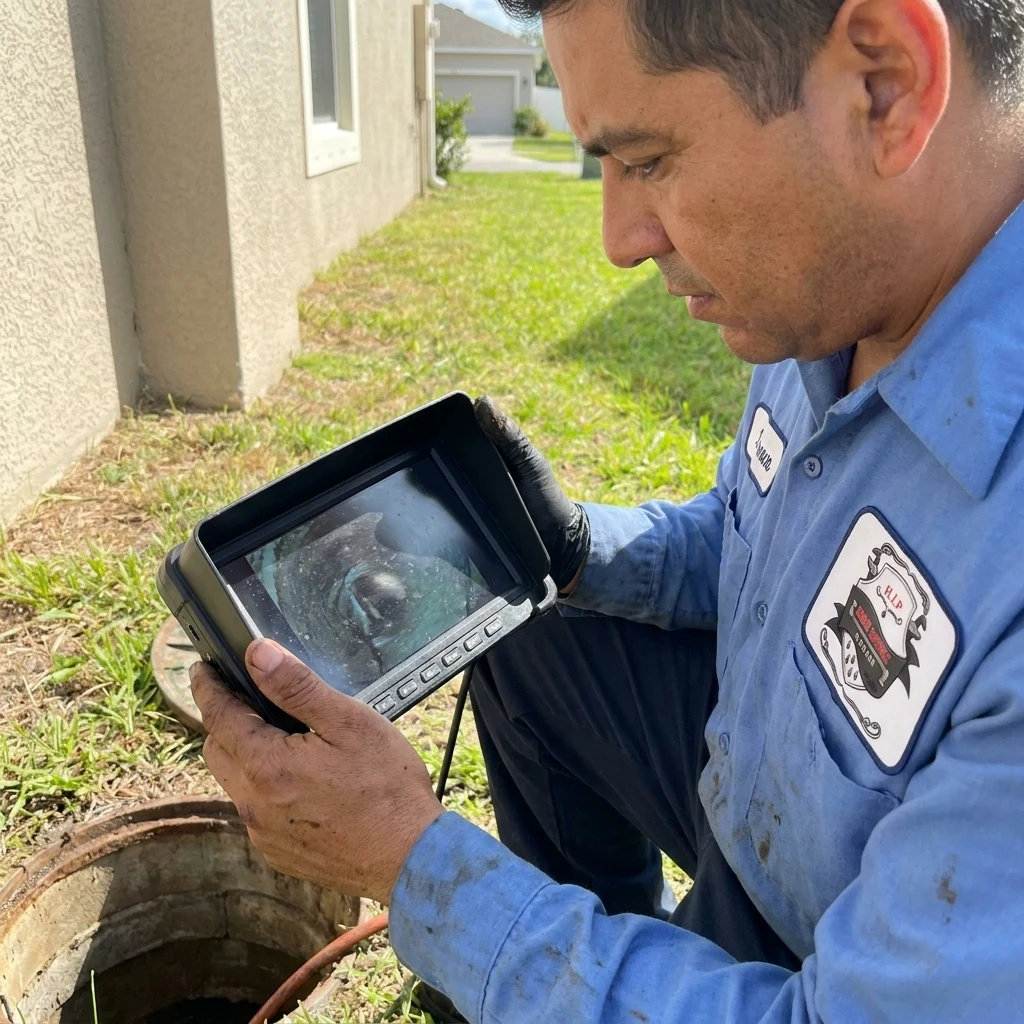
Concrete-block houses of this period can sit on a slab, in which case branch lines run under the floor and the only access is a cleanout, a trap or a vent. The camera goes in from there, and the footage shows whether the pipe is scale-narrowed, rooted or damaged.
Services That Suit Cast Iron and Concrete Block
The houses here were built between 1922 and 1953, with the heaviest infill in the late 1940s and 1950s.
- Hydro Jetting Services — Moderate pressure to scour scale off sound cast iron; if the wall is thin or holed, we stop.
- Sewer Line Hydro Jetting — Runs from the house to the street on narrow lots, with hose and truck placement planned around parked cars.
- Kitchen Line Grease Jetting — If the house sits on a slab, the branch lines run under the floor, so the sink line is cleaned from the trap and the nearest vent.
- Root Removal & Line Clearing — Used where the camera shows roots at an iron joint, then rechecked afterward.
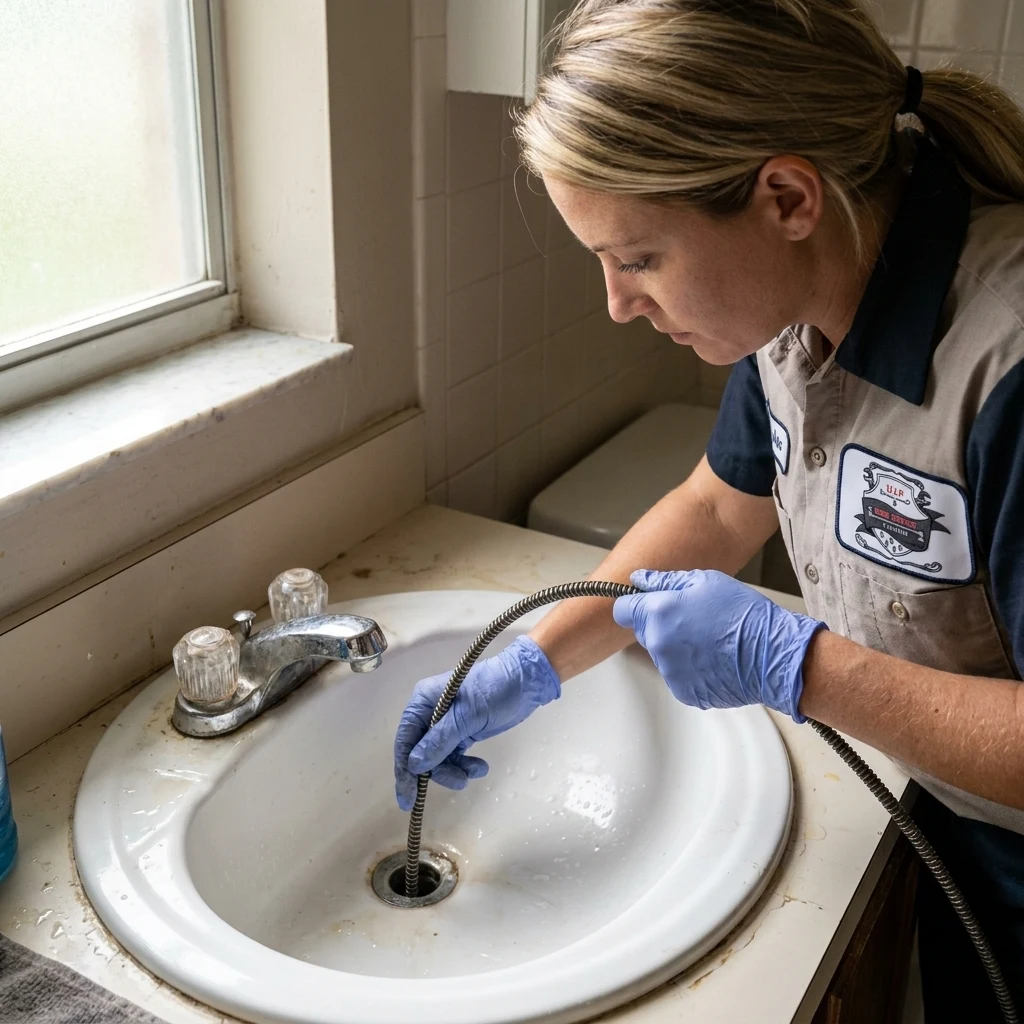
- Drain Cleaning & Snaking — Single fixture clogs, accessed through traps and cleanouts on concrete-slab homes.
- Sewer Camera Inspection — Shows scale, thinning, sags and offsets in 70-year-old iron before it is cleaned.
Hydro Jetting Near Florida Southern College
A scale-narrowed cast iron line is a legitimate jetting job when the metal is sound, because the water scours the wall without cutting through the thinned spots. If the picture shows a hole, a corroded joint or a collapse, we stop. The post on clay and cast iron explains the limits, and hydro jetting describes the method.
Camera inspection (sewer camera inspection) runs $150 to $300 alone, and a bathroom branch snake run is $175 to $325. Pages for Lake Morton and Cleveland Heights cover the neighbors to the west and south-west.
Biltmore-Cumberland Blocks, From Francis Boulevard to the College Edge
The district is a grid of sixteen blocks with a diagonal at its north end, bounded by four named streets.
- Francis Boulevard — The diagonal street with a landscaped divider, reminiscent of City Beautiful design; the north end of the district is irregular because of it.
- Biltmore Place — The second diagonal street in the north part, north of E. Palmetto Avenue.
- E. Palmetto Avenue — The street that separates the irregular north end from the regular grid to the south.
- Ingraham Avenue edge — The western boundary, where the district meets the Lake Morton neighborhoods.
- Hollingsworth Road edge — The eastern boundary of the district; the sixteen blocks lie west of this road.
- E. Lime Street edge — The northern boundary of the sixteen blocks, with the district lying south of it.
- Frank Lloyd Wright Way edge — The southern boundary, beside Florida Southern College; the district lies north of it.
- 1940s-50s masonry blocks — Blocks of post-war concrete-block houses; some have single-width front-facing carports or garages.
Roads Around the Biltmore-Cumberland District
- Francis Boulevard — The district's signature street, with a landscaped divider and wide lanes.
- Ingraham Avenue — The western edge, separating Biltmore-Cumberland from the Lake Morton districts.
- Hollingsworth Road — The eastern boundary of the district; the blocks lie to its west.
- E. Lime Street — The northern boundary of the sixteen blocks; the district lies south of it.
- Frank Lloyd Wright Way — The southern boundary, running along Florida Southern College; the district lies north of it.
- Florida Southern College — The 1922 arrival of the college prompted the opening of these subdivisions.
- Lake Hollingsworth — The lake south of the campus, circled by the Lake-to-Lake Trail.
- S. Florida Avenue (SR 37) — The main north-south street, to the west of the district.
What the Biltmore-Cumberland Record Says About Its Age and Builders
- The Biltmore-Cumberland Historic District has both National Register listing and local designation dated 2004, and about 201 buildings. Houses from the 1940s and 1950s were built when cast iron was the standard drain material, so some may still carry it.
- The period of significance for Biltmore-Cumberland runs from 1922 to 1953. Pipe from that stretch may be cast iron, possibly with clay under the yard, and the camera shows the thin spots before any water goes in.
- The district was subdivided by William P. McDonald, John E. Melton, Gertrude Overstreet and Paul H. Calvin. Different builders laid out different blocks, so lateral material and cleanout placement can change from one block to the next.
- Lakeland's Glendale water reclamation plant, at 1825 Glendale Street, has treated sewage since 1926, and its effluent has gone to the Se7en Wetlands since 1987. The city has treated sewage in south-east Lakeland for nearly a century; where your house line joins that system is a question for the utility.
Biltmore-Cumberland 33801: ask about the driveway first
On narrow lots with carports, where we park matters. Call 813-733-7188 and tell us whether the driveway or curb is the better spot, and whether anyone can open a gate at the side of the house.
CALL 813-733-7188Biltmore-Cumberland Questions: Cast Iron Age, Slabs and Access
Homes from the 1940s and 1950s may have cast iron drain lines that are now 70 to 80 years old. Cast iron can last 50 to 100 years, but the inside roughens and the metal thins as it ages. We confirm the material on camera before choosing a method.
Recurring slow drains, gurgling, roots at joints and sags the camera reveals. None of these alone proves failure. The footage shows which are present and how serious they are, so you can decide on cleaning, watching or calling a plumber.
Often, yes, when the camera shows sound metal. Jetting at moderate pressure scours scale without hammering. If the wall is thin, holed or badly corroded, jetting could make a leak worse, so we stop and recommend a plumber.
Many masonry and concrete-block houses of that period are. If yours is, the branch lines run under the floor and we access them from cleanouts, traps and vents. A camera can follow the line from there.
Yes. We cover the whole district in 33801, including the brick streets and the narrow lots. We plan hose and vehicle placement around the parking and the street width, and we tell you in advance if we need the driveway or a space at the curb.
Biltmore-Cumberland and the Districts Beside It
Lake Morton
West across Ingraham Avenue, with older houses on deeper lots and longer laterals.
Cleveland Heights
Across Lake Hollingsworth, golf-community lots with a mix of pipe materials.
Downtown Lakeland
North-west, where apartments above shops share vertical stacks.
Lake Hunter Terrace
Built mostly during and just after World War II, but on brick piers with open space under the floor.