Buyers of older Lakeland houses spend a lot of attention on roofs, wiring and foundations, and with good reason. The sewer lateral rarely gets a look, even though it is the one system you cannot see, cannot easily reach and may be 100 years old. A camera inspection in the option period turns it from a question mark into a recording.
Why Historic-District Houses Deserve a Closer Look
The city’s district documents tell the story of the housing stock. Dixieland’s plat dates to 1907 with building picking up in the 1920s; most Lake Morton houses went up between 1920 and 1926; Beacon Hill started in 1923; Biltmore-Cumberland ran from 1922 to 1953. Trade sources say clay, cast iron and Orangeburg were common in the eras those houses were plumbed, and Orangeburg production ended around 1974. Any given house may have been partly replaced, which is exactly what the video helps establish. Our Dixieland and Downtown and Munn Park pages describe what is typical on those streets.
Questions for the Seller or Listing Agent
- Has the house had sewer backups or slow drains, and when was the last one?
- Has any section of sewer or main drain line been replaced? Is there paperwork?
- Where is the cleanout, and is it accessible?
- Have any large trees near the front yard been removed recently, or are any still planted close to the line?
- Has a plumber or drain company run a camera down the line before? Can you get the video?
- Is the property on city sewer or septic? Confirm by address with the utility; the septic or sewer article explains how.
Getting the Property Ready
The inspection is quick when access is easy and slow when it is not. Before the appointment, ask the listing agent to:
- Confirm that the cleanout cap can be removed. Old caps are sometimes stuck, painted over or buried under landscaping.
- Clear leaves, mulch or stored items from the area around it.
- Leave water service on, since running a fixture helps the technician see flow and check for standing water in the line.
- Unlock the garage, side gate or crawlspace door if the line is reached through there.
If the cleanout turns out to be missing or buried, say so early. Another access point may be available, and that is a better conversation to have before closing day than after.
What the Video Can Show

- The pipe material and where it changes, such as clay giving way to PVC.
- Root intrusion, with the location of each entry point.
- Sags, where water pools in a low spot instead of draining.
- Offset or separated joints.
- Heavy scale, grease coating or debris that a cleaning could remove.
- Cracks, breaks or collapse that need a repair contractor.
What It Cannot Tell You
It cannot predict how many years the pipe has left. It will not show a branch line beyond the access you gave, or anything under the slab that the camera cannot reach. It does not replace a general home inspection; a standard inspection generally does not run a camera down the lateral, so ask your inspector what is covered. And a clean video on one day does not promise the line will stay clear.
Reading the Footage Together
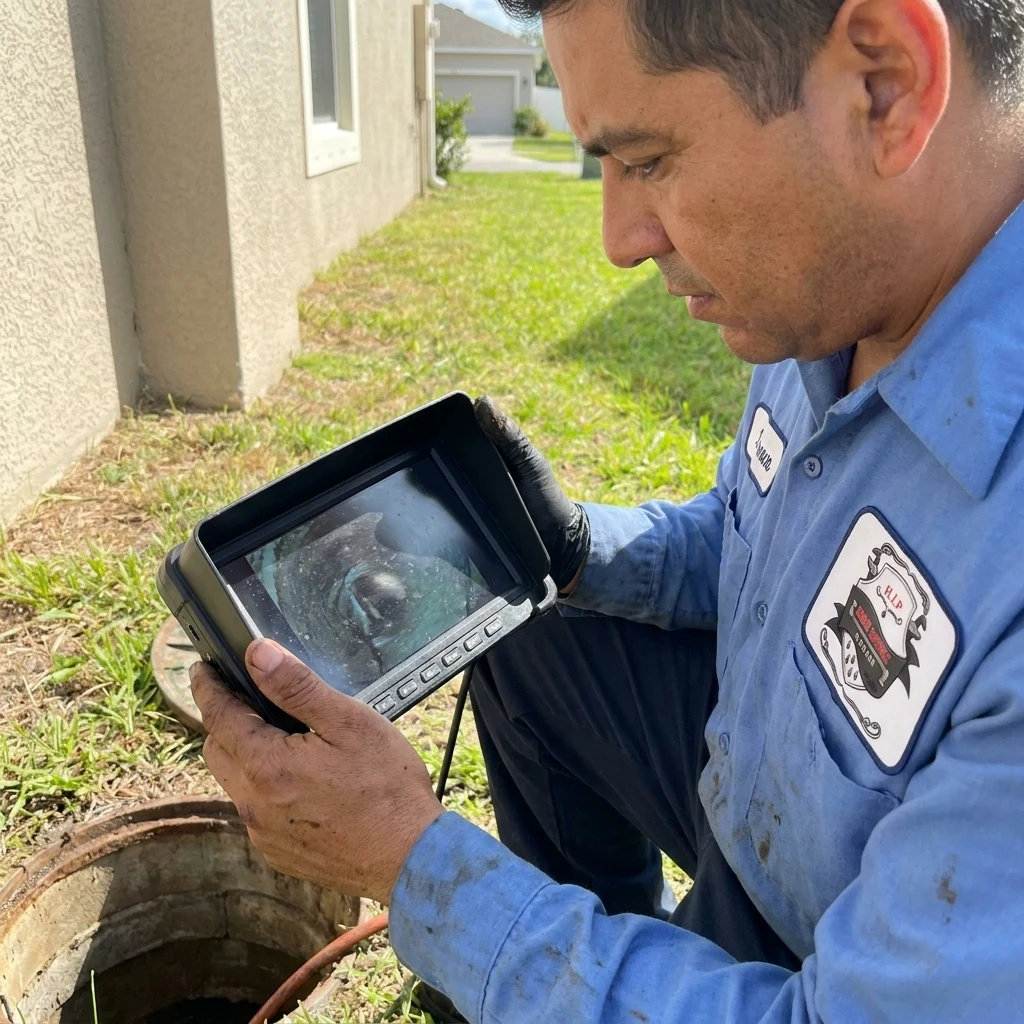
Ask the technician to pause at every change in material and at every spot where water stands. Request distance markers, so a finding can be placed against the lot: “roots at 40 feet,” for example, means something to a plumber. Ask for a copy of the recording and of any notes. Then sort the findings into three piles: maintenance, such as buildup or light roots that a cleaning handles; items to price with a plumber, such as a belly or an offset joint; and deal-breakers, such as a collapsed section. That sorting is what turns an hour of video into an actual negotiating position.
Costs and Next Steps
A stand-alone camera inspection runs $150 to $300 in Lakeland, with a written price first. If the footage shows a simple blockage or heavy buildup, we can often clean the line in the same visit and credit the camera toward the work: hydro jetting is $350 to $650 for a standard residential job. If it shows damage, you get the recording and a straight recommendation to bring in a plumber or repair contractor, which gives you a documented basis to negotiate repairs or a credit. We do not perform the repair.
Book the sewer camera inspection early in the option period so any follow-up has time. The guide to warning signs is also worth a read before you walk the house, and the Lake Morton page covers that area’s deep-lot, long-lateral layout.
Under contract on an older house?
Book the camera early in the inspection period. You get the video and a written price for any cleaning.
CALL 813-733-7188Home-Buyer Camera Inspection Questions
For a house built before the 1980s, it is worth the cost. It shows pipe material, roots, sags and breaks that a visual walk-through cannot, and it gives you a recording to use when negotiating repairs or credits.
Usually not in depth. Many standard inspections check visible plumbing and fixtures, not the buried lateral. Ask your inspector in advance what is covered, and book a camera inspection separately if the line is not included.
You get the footage and our honest recommendation to contact a plumber or repair contractor. We clean, jet and inspect; we do not excavate or replace pipe. The recording helps you negotiate repairs or a credit with the seller.
It depends on access and the length of the line. With an open cleanout it is generally a short visit. A buried or stuck cleanout can add time, which is why preparing the site matters.